Sharing interesting finds, Encouraging you to explore
Issue 01 March 2025
Step One; Get to Know Your Land
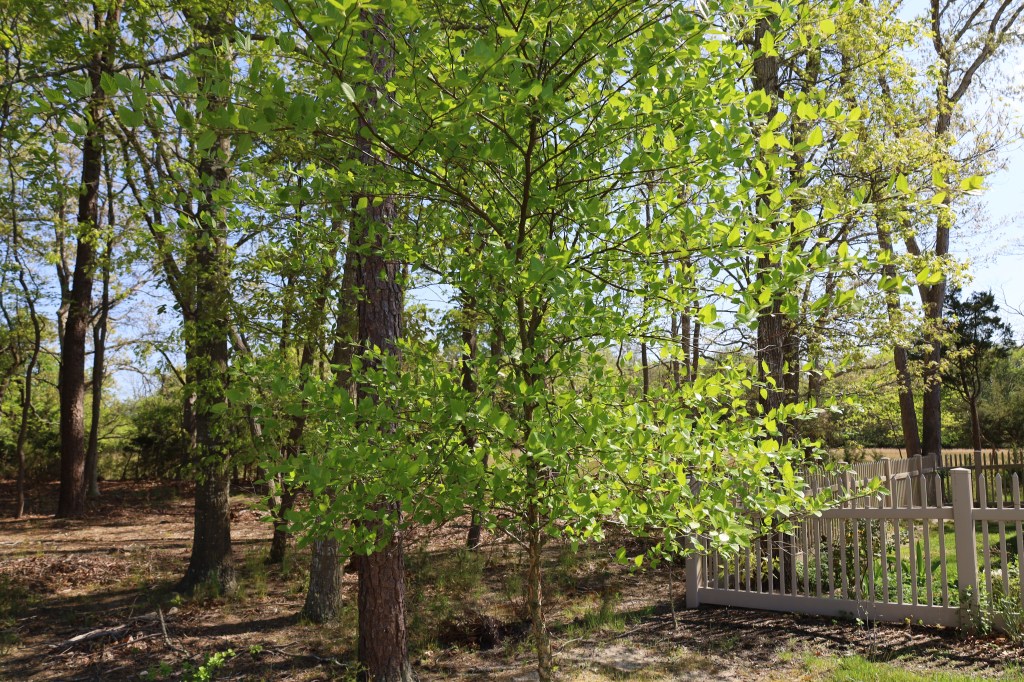
In beginning your journey to creating garden spaces in your yard, first a shift.
Just a small change of vocabulary will open up the way you see the space around your home. Referring to it as our “yard” immediately boxes the space up into this image of a finite square used for utilitarian purposes and/or for static adornments kept to tidy corners. Apply this too to the balconies and patios of homes in cities and complexes. Now, look at this space and think instead, this is my land. For me, this changes something. It conjures up kinship and stewardship, connection, and a sense of place to be explored. My land is a place I want to care for and encourage to grow healthy. Some may think, as I used to, that having a truly wild space, an ecologically beneficial garden, means taking our hands away and leaving nature to its devices. But we live within nature, have always had a symbiotic relationship with it, and we are meant to tend it. We just have to relearn how.

What does it mean to get to know your land? It means observing the undulations of the topography, the plants that spring forth in the folds and crests and flat expanses, where the wildlife gather and where they enter and retreat, and how rainwater moves across surface.
The best way I can think to intimately acquaint yourself with your land, is to look at it as you would have when you were a kid. Growing up I had a nice little back and front yard that I spent long hours in, quietly observing from all angles. I’d lay on the ground watching insects busying themselves through the grass, the angle of sunbeams tracking through tree canopies. I knew the precise spot the little purple flowers would sprout in the shade near the fence. I skimmed the surface and the floor of our small pool to try and identify the bugs that fell in. I’d close my eyes and listen to the jungle cacophony of birds and try to recognize familiar calls. I knew the areas that would grow thick and tangled in the summer creating places for wildlife to rest. I waited for familiar puddles to appear during rainstorms and had places I’d meander to, to watch trickling water run rivulets like tiny rivers through earth and stone. I also knew these secrets about the neighborhood around me, which is all part of the same land and these discoveries will help the patio and balcony gardener as well.
I believe we are most observant to the natural world without intending to be, when we are children, so when learning your landscape, act like a kid. Get down in the dirt to see the shape of your land from a different perspective. Spend uninterrupted time listening and seeing the patterns of nature. All of these will knit together to create the picture you need to start building your space back into the natural landscape, as well as creating a space that you will use and enjoy more.
We’ll delve further into observing your land in the next issue!
Till next time, remember; you don’t have to be an expert, you just have to be curious!
-Becky
Bee Curious at Home! What will Your Soil Grow?
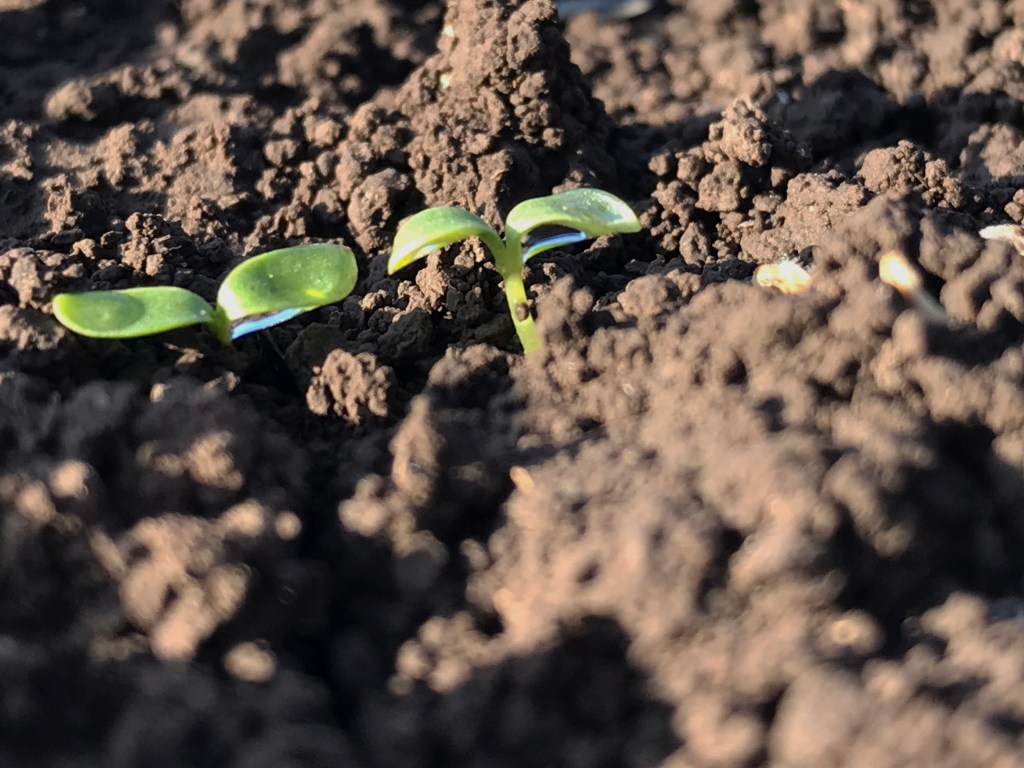
As many of us know, our soil is, literally, the foundation of our land. Before we choose our plants we need to know what type of soil we have (sandy, loam, clay), the moisture levels, pH, fertility, and how much sun hits it.
There are a number of ways to test at home without fancy equipment- the jar test and soil pyramid for type, red cabbage water for pH, etc- but there’s another way you can try. Working backwards! You gather info about the plants that are already in your soil to inform you of your conditions. We’re talking about your seed bank.
First, a seed bank is the collection of seeds below the surface of your soil that are ready to germinate when the soil is disturbed. This can include some exciting surprise natives and unwanted weeds. You can explore this by turning over some soil in your yard and waiting to see what springs up, or you can take soil samples to germinate indoors. Also- check out what grows in unmaintained areas of your yard and around your neighborhood.
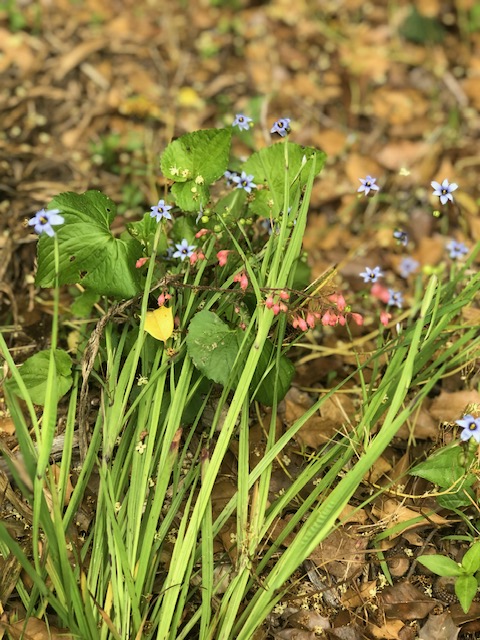
I have done the outdoors version and in my own yard I’ve gotten asters, goldenrod, st johns wort, blue eyed grass, liatris, dewberry, sedge, bluestem grass, toadflax, a variety of trees and many more from my seed bank. We will be trying indoor germination together!

Here’s what I did; Since I already knew what was in my seedbank I went to my friend’s and my in-laws houses and asked if I could steal some soil samples. (Don’t worry, they’re used to me!) I used a spade to dig down about 6 inches and put the soil from the entire depth into a mason jar. I sampled a few different spots within the same general area. (Keep samples from sun and shade or wet and dry separate. I’ll discuss “microclimates” in the next issue!)
Then I just fished out some containers from my recycling, poured the soil in, watered, and stuck in a warm window, and I’ll be making sure to keep them moist and warm. Now, seedlings are difficult to identify so you’ll have to wait until they get a bit bigger to start to see their “true leaves”. The first leaves that emerge are called cotyledons and don’t resemble what the plants actual leaves will look like. I suggest downloading a plant ID app to help you when you get to that stage, but be aware they aren’t always 100% accurate.
As you gather your list of the plants that emerge, start searching their individual growing conditions. Where they overlap, you’ll start to suss out what your conditions are. Also search online for how to “read your weeds”. There are some lists out there that give you a general idea of what conditions some weeds prefer.
Keep checking out our social media to see how mine goes and be sure to share with me what you germinate!
(I know we are usually told to not disturb the soil to maintain its structure, biology, and to keep weed seeds from germinating. Sometimes residential soil is so compacted and devoid of life that churning it up is a good thing. If your soil is good, a few small patches turned over won’t cause harm, as wildlife does this naturally and it can help add to plant diversity.)
Coming Up!
This season we are rolling out our new design process! We have always picked the right plants for the right place, added a little artistic touch with color and texture, and made sure there are 3 seasons of interest. However- we have been doing a lot of reading! And we’re taking that new knowledge to tweak our process so it can serve the environment even better!
What we learned is that we don’t need to reinvent the wheel when designing ecologically, we just need to follow nature. As said in our new favorite book Garden Revolution by Larry Weaner and Thomas Christopher, “After all, nature has been in the plant arranging business far longer than even the most accomplished garden designer.”
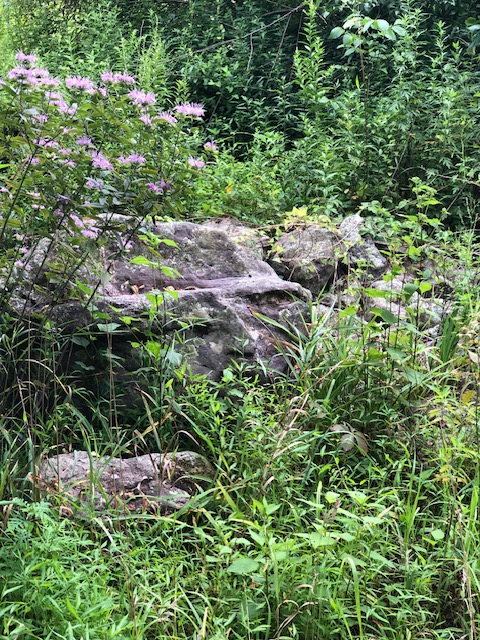
We started researching and found a database that lists habitat types that exist within certain areas, the conditions that make up those habitats, and the flora and fauna that inhabit that ecosystem. Of course, everything was in Latin so we had a lot of translating to do! (Luckily I remember enough of my high school Latin to get by!) Fast forward to now, we have new designs to cover a variety of site conditions, using plant community that exist in nature.
Why this is a better approach is because plants that have evolved together grow better together. They occupy different niches above and below ground, so they won’t out-compete each other, cover the ground more completely to prevent weeds and erosion, and have multiple methods of reproduction so your garden fills in faster and will continue to refresh itself.
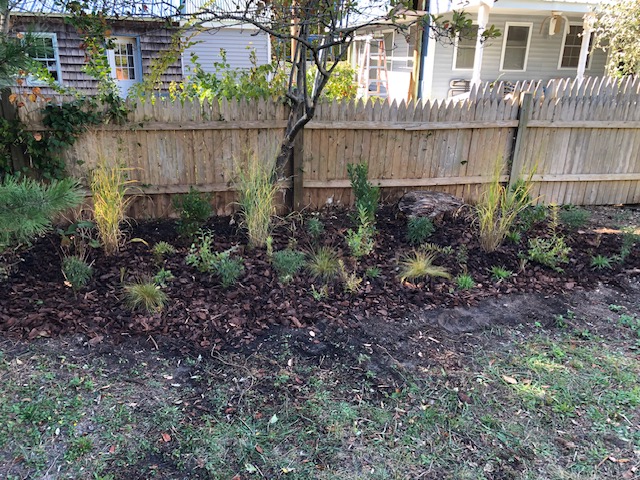
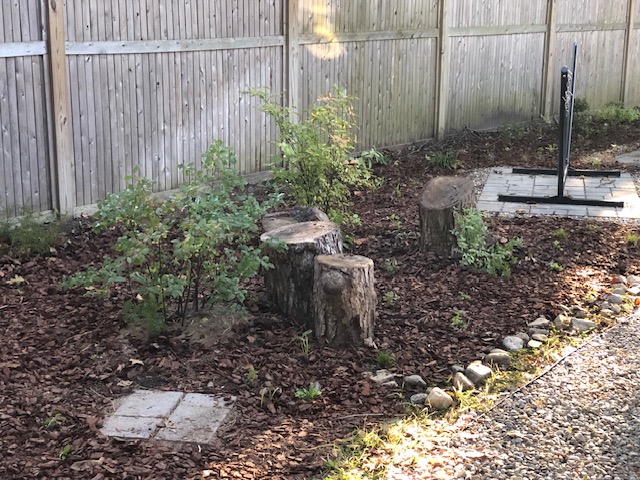
Check out the pics below to see some of the gardens from last season that were planted with this new method. (see the home page of our site for a more in depth look!) And check out Larry Weaner’s organization New Directions in The American Landscape www.ndal.org, and the database we used www.natureserve.org.
If you’re local, come see us next month at the Earth Day Green Market on Friday, April 25th which has a focus on native plants. This event is part of a summer long market hosted by Go Green Galloway, at Historic Smithville. Check them out at gogreengalloway.org